Example: query high-affinity CXCL12 receptors
This example shows how to screen CXCL12 candidate receptors from UniProt, literature, and pathway information, and organize the results by affinity evidence, cellular localization, and functional association.
Example summary
| Item | Content |
|---|---|
| Task type | Protein query and receptor screening |
| Subject | CXCL12 (SDF-1) and its human receptors |
| Input | Protein names and screening goals; no file uploads needed |
| Output | Candidate receptors, evidence sources, localization, pathways, and disease associations |
Task goal
- Find receptors with direct binding or functional activation evidence.
- Distinguish confirmed receptors, indirectly associated proteins, and prediction-only candidates.
- Provide priorities for follow-up expression, binding validation, or literature review.
Question submitted
Query the high-affinity receptors of human CXCL12. Integrate UniProt, literature, and pathway information; list receptor names, gene symbols, subcellular localization, binding or activation evidence, related diseases, and evidence sources. Distinguish direct evidence from inference, and do not treat expression correlation as binding affinity.
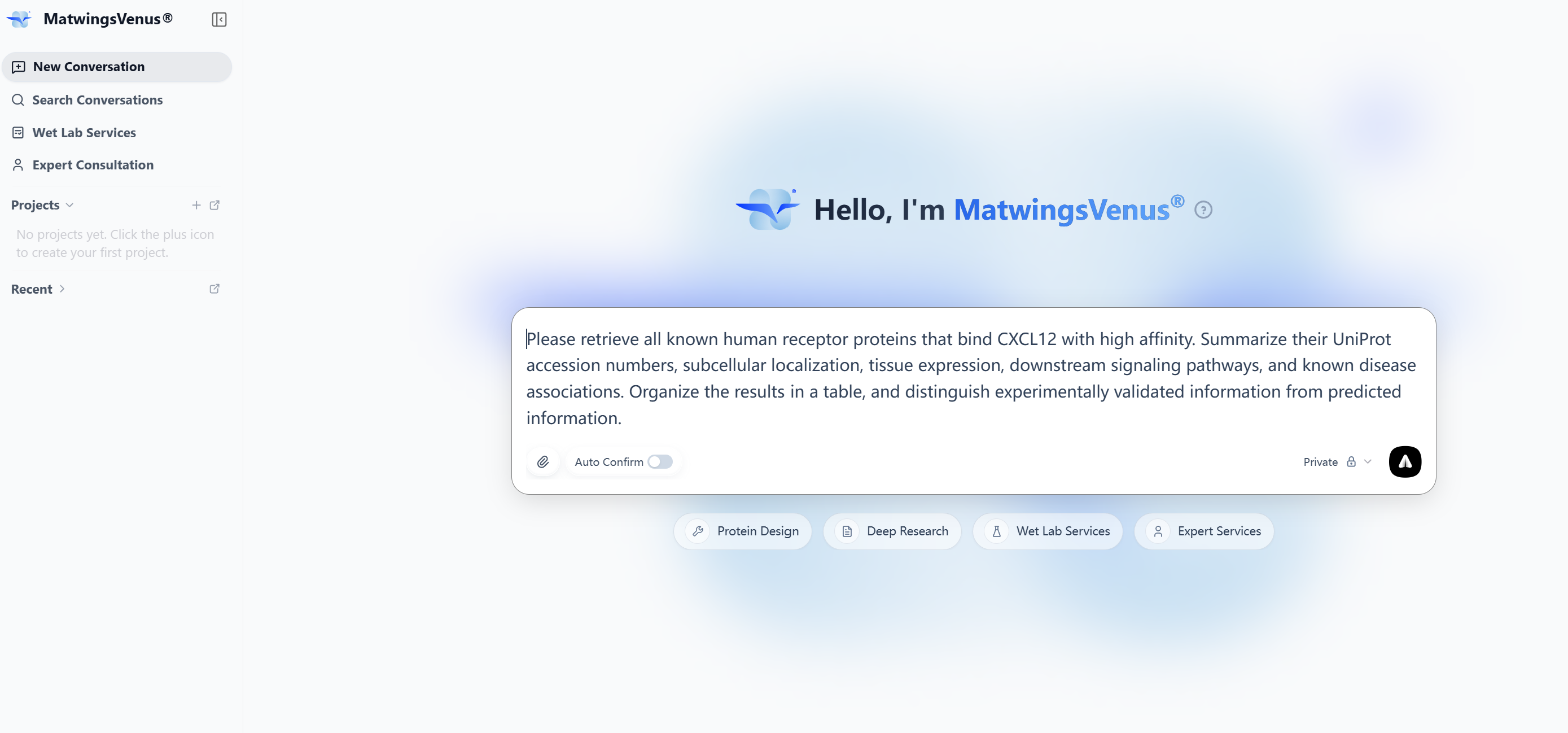
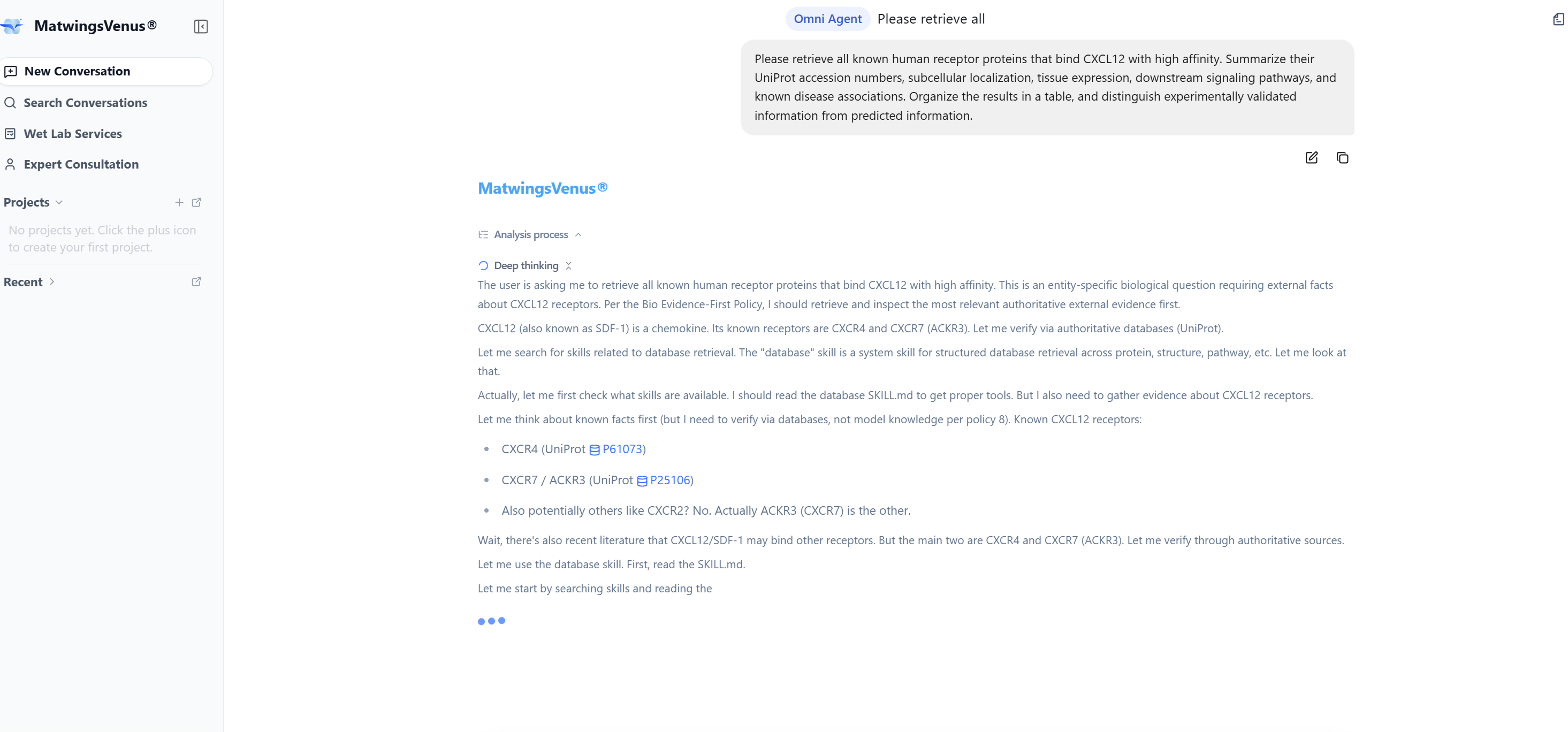
Analysis process
| Step | Tool or method | Purpose |
|---|---|---|
| 1 | Protein database retrieval | Confirm CXCL12's standard name, species, and synonyms |
| 2 | UniProt receptor association | Collect receptor entries, localization, and functional annotations |
| 3 | Literature and pathway retrieval | Cross-check binding, signal transduction, and disease evidence |
| 4 | Deduplication and grading | Separate direct evidence, indirect evidence, and candidates pending validation |
Organizing results
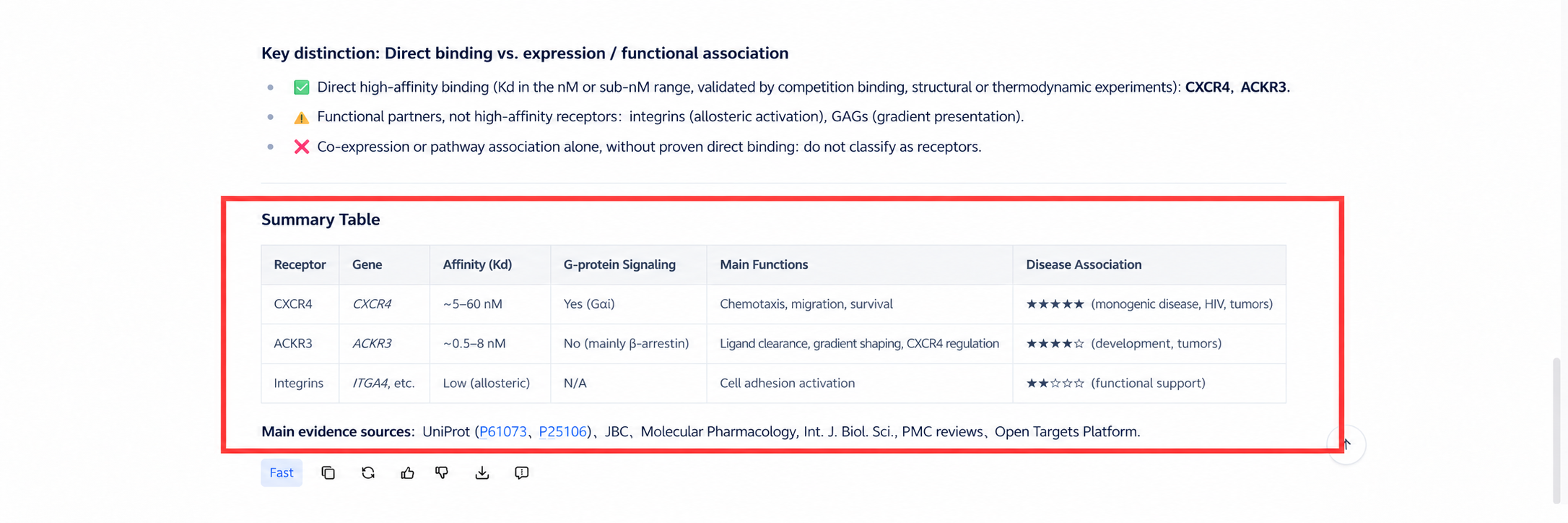
Organize the final results into these fields:
| Field | Notes |
|---|---|
| Receptor name and gene symbol | Use database standard names, not only abbreviations |
| Evidence type | Direct binding, functional activation, genetic association, or computational prediction |
| Localization and expression | Record cell surface, tissue, and assay conditions; not equivalent to affinity |
| Downstream pathways | Signal transduction the receptor engages upon activation |
| Evidence source | Keep UniProt entries, papers, or database links |
Review and boundaries
- Check consistency of species, receptor isoforms, and ligand names.
- Affinity values must state the assay method, temperature, and units.
- Cellular expression, pathway co-occurrence, or docking results alone cannot prove high affinity.
- For experimental validation, prioritize binding assays, receptor expression checks, and downstream signaling detection.